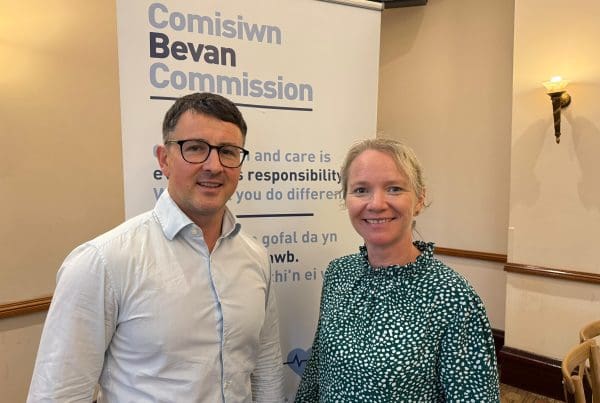


Christine Roach and Jules Godden
NHS Wales Performance and Improvement
Building resilient and resourceful communities
Background
EPP Cymru has delivered self-management education for 20 years, empowering people with chronic conditions to live healthier lives and reduce NHS pressures.
With 48% of adults in Wales living with long-standing illness, there is an urgent need for sustainable, community-based support.
Peer support offers emotional, practical, and social benefits, aligning with Welsh Government priorities for prevention and person-centred care.
Aims and Objectives
To establish a national EPP Peer Support Service that complements self-management education, builds resilient communities, and improves health outcomes.
Objectives include creating accessible peer networks, reducing isolation, promoting behaviour change, and supporting NHS sustainability through prevention and reduced service demand.
Approach
A phased plan:
- Consultation (Late 2024): Engaged patients, health boards, and stakeholders via surveys and design workshops.
- Development (Early 2025): Created online and in-person models, engaged health care professionals and developed evaluation criteria.
- Delivery (Mid 2025): Three pilots delivered with immediate reviews and continuous improvement (PDSA cycles).
Outcomes
For patients: Increased confidence in managing conditions, reduced loneliness, stronger coping skills, and improved self-care.
For the NHS: Early signs of fewer unnecessary appointments, proactive health monitoring, and potential cost savings through prevention.
Notably, volunteering opportunities have emerged as participants who benefited from peer support are now stepping forward to help lead and sustain future groups – creating a foundation for long-term community involvement.
Impact
97% of patients found peer support highly effective
The first three peer support sessions are already driving change. Participants report feeling more connected and empowered, while health boards note improved engagement and early intervention behaviours.
These developments mark the beginning of a shift toward sustainable, community-driven support that enhances wellbeing, strengthens social networks, and aligns with Welsh Government priorities for prevention and resilience.
“What does peer support personally mean to me? Quite simply, it’s been a lifeline.” Patient
“It’s a place where you can talk freely and be amongst friends.” Patient
“Life is challenging on so many levels. To have access to this brilliant service, is marvellous.” Patient
“These initiatives save clinicians valuable time.” Clinician
Conclusions
Peer support is proving to be a practical, cost-effective complement to clinical care. Early results confirm its potential to empower individuals, reduce NHS pressures, and foster resilient communities. Success depends on continued collaboration across health boards, voluntary partners, and local networks to scale and embed this model nationally.