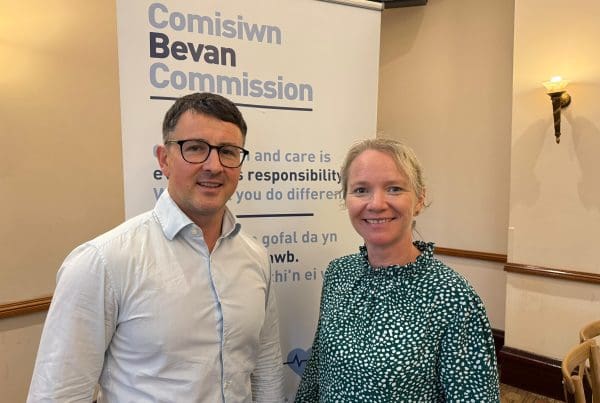


Jamie Duckers, Darcie Williams and Zoe Morrison (CAVUHB), and Rhiannon Edwards (NHS Wales Performance and Improvement) and Laura MacDonald (Carecircle)
Cardiff and Vale University Health Board and NHS Wales Performance and Improvement on behalf of the Wales Rare Care Centre Leadership Group and Carecircle
Award Winner – Excellence in Digital Health and Innovation Award, Welsh Healthcare Awards 2025
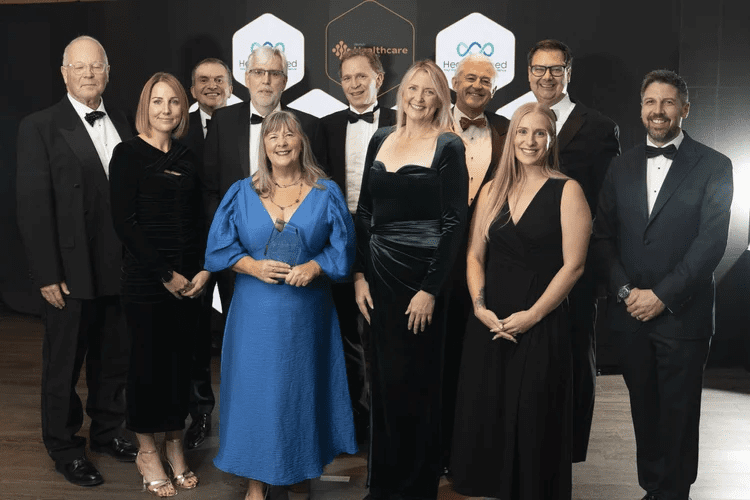
Finalist – Empowering Patients through Digital, HSJ Digital Awards 2026
Background
Rare diseases affect 1 in 17 people globally, including around 180,000 in Wales, many facing life-limiting and complex conditions with limited treatment options or care pathways.
Individuals and families often experience isolation, delayed diagnoses, and fragmented support. The “diagnostic odyssey” can take years, with patients repeatedly explaining their history to different professionals.
Even after diagnosis, they face ongoing challenges coordinating health, education, and welfare needs with little support.
This lack of integration fuels health inequalities, limits access to research and NHS services, and contributes to declining mental, physical, and social wellbeing, increasing reliance on care resources
Aims
1. Develop a Wales digital rare care centre (WDRCC)
- In three SE Wales health boards, complete IG guidance to enable access for all.
- Complete a 5-year contract between health board and industry partners for continued development.
- Engage four rare disease clinical teams to support the pilot; developing resources and onboarding families onto the platform for evaluation and co-creation.
2. Pilot peer support content and horizon scan for technology
- Develop peer support groups and access to resources developed to facilitate a smooth transition from paediatrics to adult services.
- Work with clinicians to understand the current gaps in support and potential solutions.
- Work with Expert Patient Programmes to improve access to leadership and empowerment skills support.
3. Understand the impact of online service provision to NHS Wales
- Enrol in the climate emergency dragons heart academy.
- Continue stakeholder engagement about the impact of the WDRCC on the Welsh Government digital and data strategy for health and social care in Wales.
4. Peer clinical support and share opportunities across rare disease clinical services
- Bringing Medical and social care professionals working with rare conditions together
- Signposting each other to relevant resources to help increase access to support materials for professionals and families alike.
- Regular peer support sessions and shared learning opportunities.
Approach
1.Industry partner developed the rare disease platform.
2.Clinicians and lived experience groups defined priorities.
3.Governance, cybersecurity, and partnerships with NHS and charities followed.
4.Stakeholder engagement, PPIE groups, and shared learning shaped progress.
5.Combined resources improved access and equality.
6.Ongoing development invites community input into the Wales Digital Rare Care Centre vision.
Results
The Wales Digital Rare Care Centre is already highlighted as an example of good practice. The NICE Rare Disease Quality Standards and other UK rare disease framework guidance documents are currently being developed, focusing on public requirements for a one point of access digital platform to improve awareness of rare diseases and to share resources and peer support.
Impact

The development of a rare disease MDT peer support group will have benefits further than the boundaries of this project and help the clinical team members involved in rare disease care to share learning and gain valuable support from each other.
One access point, currently links to three separate, but interlinked hubs. 48 spaces (rooms) have been requested and developed by stakeholders and accessible in 5 languages (including Welsh). 186 documents have been uploaded, including videos. 64 clinicians and non-clinicians are using the site
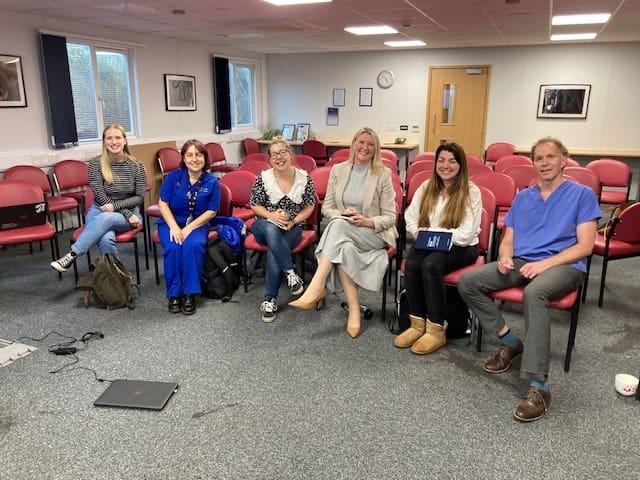
The Project Team
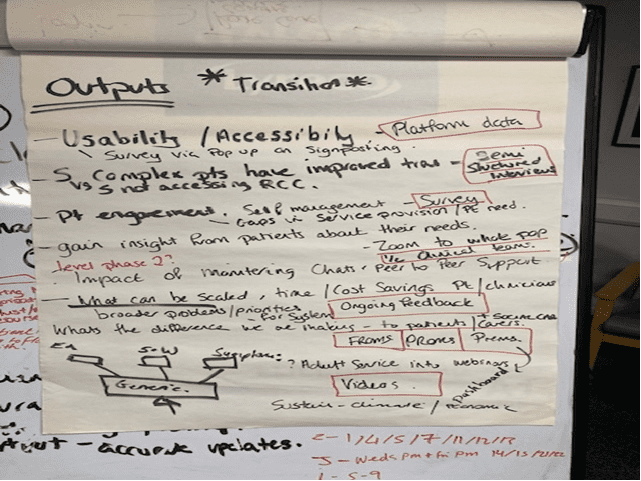
The first meeting of the Bevan Commission Exemplar Project team, looking at meaningful outputs and measures of progress in order to start our SMART objectives over the next 11 months.