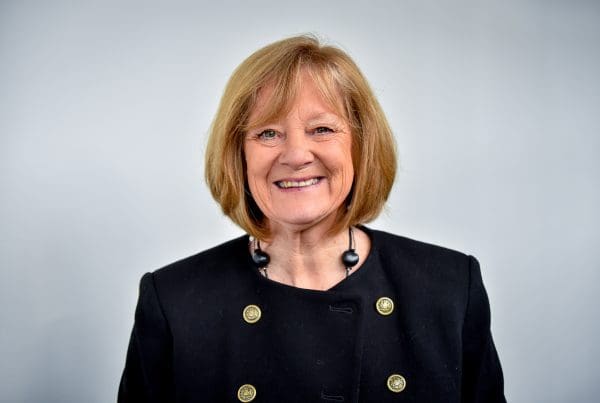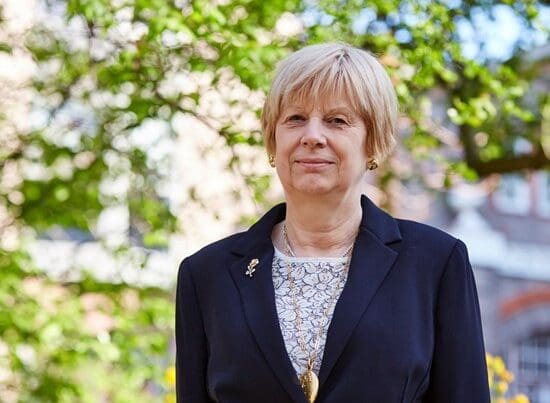



By Fran Targett OBE, Bevan Commissioner
After a lifetime spent working alongside people facing financial hardship, one truth has become impossible to ignore: health matters, and Wales cannot fix its long‑term health challenges without confronting the economic realities that shape people’s daily lives. Yes, we must deal urgently with waiting lists, emergency care pressures and the worrying state of our population’s health. But unless we address the financial insecurity that underpins so many of these issues, we will be treating symptoms, not causes.
Financial wellbeing is not a luxury. It is a fundamental determinant of health. The Money and Pensions Service describes it as feeling secure and in control of your finances—able to pay today’s bills, cope with the unexpected, and build a stable future.
When people cannot afford the basics—food, heating, transport, rent—their health suffers. Poor financial wellbeing shortens the years people live in good physical and mental health and contributes to premature death. It worsens existing conditions, fuels mental distress, and forces people into a cycle where money worries and health problems reinforce each other.
Stress and insecurity make healthy choices harder. People under financial strain are less likely to eat well or exercise, and more likely to turn harmful behaviours such as smoking, alcohol or gambling. Cold, damp homes—unaffordable to heat—exacerbate respiratory illness. And poor health itself becomes a barrier to financial stability, limiting access to education, secure work and the support services that could help people regain control.
The burden is not shared equally. Research from the University of Bristol (2024 Financial Wellbeing and Ethnicity report) shows that white householders are twice as likely to be financially secure (30%) as those from black or other ethnic backgrounds (15%), and groups such as social renters, lone parents and people with disabilities or a long-term condition are far more likely to experience low financial wellbeing. These inequalities ripple across families, communities and generations.
A Healthy Wales must be a Financially Secure Wales
If we are serious about improving health in Wales, we must recognise that health matters in every aspect of life—including the financial. Financial wellbeing must be treated as a core building block of public health, every bit as essential as access to GPs or hospitals. When people feel secure with their money, they are happier, experience less chronic stress, participate more in their communities, and are better able to make healthy choices which leads to longer and healthier lives. They also rely less on NHS services, easing pressure on a system already stretched to its limits.
This is not simply about ensuring people have “enough” money to be financially secure. It is about ensuring people have the confidence, skills and support to manage their finances throughout life, from pocket money to pensions. Schools, workplaces, communities and public services all have a role to play in building this foundation, ensuring both thriving people and communities.
Prevention must be more than a Slogan
Wales already has the frameworks to support this shift. The Bevan Commission’s Prudent Healthcare Principles, the Social Model of Health and Care, and the Wellbeing of Future Generations Act all emphasise prevention, fairness and long‑term thinking. The Cymru Can Strategy commits public bodies to tackling the root causes of ill health and reducing inequalities.
But these commitments must now be matched with action. We need a Senedd that recognises the inseparable link between universal access to health and social care, economic security and decent housing. We need policies that treat financial wellbeing as a public health priority, not an afterthought.
A Moment for Courage and Clarity
There is no avoiding the economic cost of health inequality. Taxation may need to rise to meet the scale of the challenge—but this moment also offers an opportunity to rethink how we use to protect the most vulnerable, strengthen financial resilience and reduce health inequalities for good.
As my fellow Bevan Commissioner Sir Michael Marmot reminds us, “There can be no more important task for those concerned with the health of the population than to reduce health inequalities.” That must be the measure of our success.
As Wales approaches the Senedd elections, we have a choice: continue to firefight the consequences of poor financial wellbeing or finally confront the root causes. If we choose the latter, we can build a healthier, fairer and more resilient Wales.
About the Author, Fran Targett OBE
Fran Targett is a Bevan Commissioner and the independent Chair of the Welsh Government’s National Advice Network. She has decades of leadership across Citizens Advice, WCVA, and national public bodies, and currently serves on the Future Generations Commissioner’s Audit and Risk Assurance Committee, and the Human Rights Advisory Group.