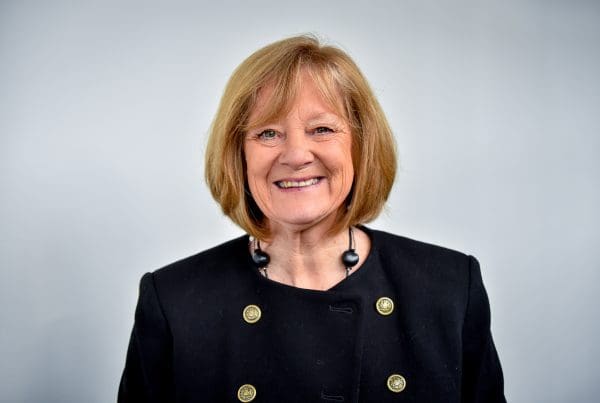



By Professor Dame Sue Bailey, Bevan Commissioner
Health matters. It matters to every one of us from the moment we take our first breath, shaped profoundly by the people around us and the communities to which we belong. Across the world, governments are recognising that social connection is not a luxury but a foundation for health. The evidence is clear: belonging, supportive relationships, and meaningful connection are as vital to wellbeing as any clinical intervention.
If we want to unlock the sustained economic growth so often described as the Holy Grail of politics, we must do more than acknowledge this truth. We must enable health, social care, education, the world of work, and justice to operate as one system, working in genuine allyship with the people they serve. Allyship is not a slogan; it demands curiosity, courage, and commitment.
Nowhere is this more urgent than in mental health. A mental health ally is an informed, empathic person who listens without judgement, connects people to support, and champions understanding across the whole system. This is the cultural shift Wales needs—one that recognises that health is shaped not only in hospitals and clinics, but in homes, workplaces, schools, and communities.
And because health is shaped across the whole life course, we must pay particular attention to the environments in which children grow. Children live in families, families live in communities, and communities are anchored by schools. The Well‑being of Future Generations Act recognises that giving children the best start is essential to lifelong health. Supporting this vision requires a shift in how we train the workforce across health, social care, education, and justice.
But for all of this to happen we need to function as a system, we must learn to agree well and disagree better. Perceived complexity frequently serves as a justification for inaction. In many cases, what is seen as complexity is simplicity obscured by multiple demands and differing perspectives. The goal remains simple: more people healthy and coping, and far fewer struggling or unwell.
In the current climate, it can feel as though we move from one crisis to another. But shifting from chaos to culture requires clarity about what culture truly is: the shared way of life of a group of people, their beliefs, customs, values, behaviours, and knowledge, passed across generations. It shapes how we see the world and how we act within it.
Wales is rich in visible culture, but the deeper layers matter just as much: the core values and assumptions that guide how we work together. These deeper layers are harder to change, but they are also where transformation begins.
Systems thinking helps us to distinguish between constant change and genuine transformation. As Gaius Petronius Arbiter observed in 66 AD, “We trained hard, but it seemed that every time we were beginning to form up into teams we would be reorganised.” Reorganisation can create the illusion of progress while generating confusion, inefficiency, and demoralisation. Wales must resist this trap.
If we are serious about moving from chaos to culture, we must recognise the tools already in our hands. Wales does not lack ideas, evidence, or goodwill; what we often lack is the confidence to use them boldly and consistently.
Collaboration is one of the most powerful levers, not the version that appears in strategy documents, but the kind that emerges when people genuinely work together with shared purpose. Collaboration is a mindset: leaders creating the conditions for trust; citizens treated as partners, not problems; organisations recognising they are part of a bigger whole, not competing islands. When collaboration becomes the norm, systems begin to move.
Kindness is another lever, not the soft version, but what Ballatt and Campling call intelligent kindness. It recognises that our wellbeing is interconnected and that compassion is a driver of quality and safety. When leaders act with intelligent kindness, it changes the emotional temperature of a system. People feel seen, able to speak up, and able to care. When that happens, everything else becomes possible.
We must also understand the power of identity and belonging. Decades of social science confirm what practitioners have long known: people stay well when they feel part of something. Belonging, whether to a family, school, workplace, neighbourhood, or cultural community, gives people the psychological and practical resources to cope with life’s challenges. When services nurture belonging rather than erode it, we unlock what the Haslams call the “social cure”.
These levers are not abstract theories. They are the foundations of a health and care system that works. They are also deeply Welsh values. If we choose to centre them, they can help us build a culture that supports people to thrive, not merely survive.
In these times of political flux, the words of Aneurin Bevan resonate: “Illness is neither an indulgence for which people should pay nor an offence for which they should be penalised, but a misfortune the cost of which should be shared by the community.”
The risk today is that competing needs push essential actions into the “too difficult” box. But health matters too much for that.
We must ask:
- Are we meeting the needs of the Welsh population?
- Are we delivering the best care everywhere, for everyone?
- Are we eliminating unwarranted variation?
- Are we choosing wisely and ensuring value for money?
This is prudent healthcare in practice. Quality improvement is not a luxury; it is the solution to our current challenges. As Sir Don Berwick, a fellow Bevan Commissioner, states the aim is simple:
- No needless deaths
- No needless pain or suffering
- No helplessness in those served or serving
- No unwarranted variation or waste
- No one left out
These principles are not abstract ideals. They are a practical blueprint for a fair, effective, and compassionate health and care system.
Wales stands at a crossroads. The pressures on our health and care system are real, but so too is our capacity for innovation, collaboration, and collective courage. If we act with intention, guided by evidence, compassion, and shared purpose, we can build a culture that supports people not only to survive, but to thrive.
Health matters. Culture matters. And the decisions we make now will shape the Wales that future generations inherit.
About the Author, Professor Dame Sue Bailey
Professor Dame Sue Bailey is a Bevan Commissioner, Child and Family Psychiatrist, and social science researcher. A former President of the Royal College of Psychiatrists and Chair of the Academy of Medical Royal Colleges, she has held senior advisory roles across the UK and now serves as President of the Centre for Mental Health and as a Non‑Executive Director in Greater Manchester Integrated Care Board.