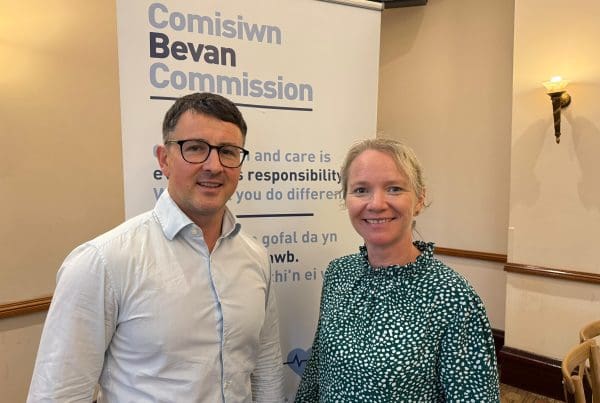


Samantha Waters, Adam Fox and Rosie Bacon
Cardiff and Vale University Health Board
Introduction
Peripheral arterial disease (PAD) is present in around 20% of people over the age of 60 years (1). PAD accounts for 83.22 deaths per 1000 person years (2). As our population grows older chronic diseases, and peripheral arterial disease will have the potential to be a financial and resource burden on the health service early detection is key (3).
Aims
- To look at reducing the waiting times of non-urgent peripheral arterial disease patients to have an expert assessment and treatment plan.
This has two major benefits. It reduces the long-term burden of this potential chronic disease , hence hopefully future proofing a deterioration of symptoms and also reducing waits for severely urgent patients to have a vascular surgeon opinion on potential limb and lifesaving surgical interventions.
Approach
This project proposed that the Vascular Consultants have the ability at triage to re-direct referrals triaged as ‘routine’ lower limb PAD patients to the Podiatry team.
Design: Development of a new clinical pathway.
Delivery: New clinical pathway implemented at point of referral from primary care to secondary care Vascular Consultants. Referrals were triaged by the consultants using the I.T referral system.
Evaluation: Mixed methods approach used.
Outcomes
A new clinical pathway was developed and implemented to deliver timely, efficient vascular assessments for peripheral arterial disease. It has:
- Reduced waiting times and improved access.
- Ensured patients are seen by the right professional.
- Positioned Podiatry as the first point of care.
- Delivered high-quality care closer to home, within community settings.
- Aligned with NHS Wales’ transformation agenda.
Impact
- 43 patients referred, triaged and assessed through the new pathway.
- Average wait time of 6.22 weeks, compared to 58 week wait to see a vascular consultant. This avoids a total of 2,226 weeks wait for this cohort.
- 66% required no vascular review, avoiding unnecessary appointments.
- Those with signs of and symptoms of PAD received a faster treatment plan.
- Only one urgent referral made to vascular consultants.
- Patients reported feeling reassured, informed and supported.
- Estimated annual saving of £22,800 for Cardiff and Vale UHB.

“Great, clarified what was wrong. Nothing was left open ended. It made a lot of sense and with circulation ruled out that was a big thing. It made me feel better. I would recommend the project.”
Patient
“This has allowed the diversion of a significant number of patients referred with likely non-vascular origin symptoms to be assessed and managed appropriately in a more timely fashion than the vascular department is currently able to manage. It also manages the risk of a inadequately structured referral leading to triaging into non-urgent category and patient sustaining harm. […].
I fully support this initiative and hope this important work is able to continue.”
Vascular Consultant
Conclusions
The project and data showed that Podiatry as a profession is very well placed and trained to receive, assess and treatment plan for this group of patients, bringing care closer to home and improving the patient journey and outcomes.
References:
- NICE CG147 (2020) Peripheral arterial disease diagnosis and management
- Mortality rate related to peripheral arterial disease: A retrospective analysis of epidemiological data (years 2008–2019. Voci et , Nutrition, metabolism and cardiovascular disease, Volume 33, Issue 3 . March 2023, Pages 516 –522
- The burden of disease in older people and implications for health policy and practice, Prince MJ, The Lancet Volume 385 Issue 9967 Pages 549 – 562. 2015.