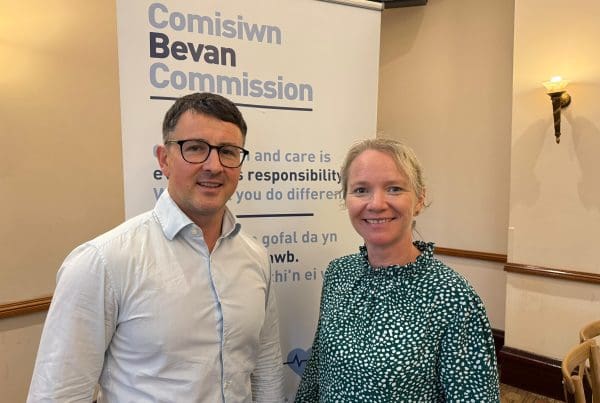


Andrea Bevan and Donna Roberts-Walters
Cwm Taf Morgannwg University Health Board
Background
The development and implementation of a health visiting cancer framework that covers Breast, Bowel, Lung, Testicular and Cervical cancer is an innovative change in health visiting practice. By expanding upon the current approach of providing universal health promotion and signposting advice to families already about 3 cancers, Breast, Cervical, Testicular.
Cancer rates in Merthyr Tydfil are 20% higher than the national average (Cancer Research UK) and according to Public Health Wales cancers are more prevalent in deprived areas with lung cancer being the most common cancer followed by bowel. Lung cancer is the leading cause of cancer death in Wales. In 2024, it caused 1,759 deaths, almost twice as many as the next most common cause.
Currently, there is no Cancer Framework within UK health visiting. As a Specialist Community Public Health Nurse (SCPHN), health visitors have universal access to families with children under 5 and are well positioned to promote early detection and prevention. By shifting from reactive discussions to proactive education around screening and symptoms, health visitors can add significant value to individual, family and community health outcomes.
Aim
Develop a Health Visiting Cancer Framework to expand current practice by promoting awareness of five key cancers.
Objectives
1.Universal Reach: Integrate cancer awareness into Healthy Child Wales Programme (HCWP) contacts, focusing on five key cancers.
2.Signposting: Direct families to relevant information on cancer identification and screening.
Approach
The project was piloted using Patient Reported Experience Measures (PREM), and staff focus groups. The qualitative information gathered by the PREM questions was collected via the CIVICA system report with a total of 8 service users completing the questionnaire.
Training was offered by Cancer Research UK and CTM trainers, though they were not directly involved in the project. An action plan with agreed timelines guided delivery.
Health visitors from a specific team, supported by their line-manager, identified service users from their caseloads between April and August 2025.
Delivery
- The project was delivered through health visitor’s caseloads at a Health Centre in Merthyr Tydfil, with families selected during key Healthy Child Wales contacts.
- Health visitors were already discussing cervical, testicular and breast cancers. Additional training was provided on cancer screening to ensure accurate, evidence-based conversations.
- PREM questions were co-developed with participating health visitors. Service users completed these conversations during routine visits.
- The focus group discussion was recorded for thematic analysis.
- Eight service users completed the PREM questionnaire.
Impact
- Health: The project involved 9 health visitors in Merthyr, with 8 service users (75% aged 25-34) completing PREMs. All reported increased confidence in seeking support after cancer-related conversations.
- Wellbeing: 100% felt comfortable discussing cancer signs and symptoms with others. Conversations led to awareness of early screening options, especially with family history.
- Service User Experience: Feedback was positive. Users recalled specific cancer messages., especially around testicular cancer, showing strong message retention.
- Service Efficacy: Using existing HCWP visits and MECC principles proved effective. Early cancer discussions with younger families support prevention and align with public health goals. Cancer remails the leading cause of avoidable death in Wales.
- Cost Savings: Cancer cost the NHS in Wales £719m in 2022/23. Prevention and early detection could reduce long-term health care and economic burdens.
- Staff & Education: Health visitors debated optimal HCWP visit timing for cancer conversations. Expanding from 3-5 cancers added time to visits, however, was seen as valuable. Staff suggested prompt cards to aid conversations.
- System-wide Approach: Staff advocated for broader involvement across the services – school nursing, sexual health, midwifery and pharmacy- to support cancer prevention.
Conclusions
- Health Visitor Engagement: enabled health visitors to explore adding 5 cancers topics into routine HCWP conversations.
- Strengthened health visitor’s role in delivering public health messages.
- Service User: Positive feedback, high recall of key cancer messages.
- Public health Value: Promoted prevention, early intervention, and detection.
- Efficiently using the HCWP programme contact to deliver conversations.