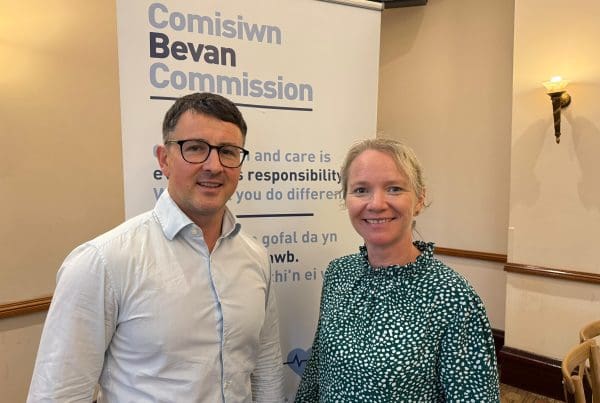


Clara Tam and Amber Hughes
Betsi Cadwaladr University Health Board
Background
Penicillin allergies are amongst the most reported allergies in healthcare, with 5.6% of the population recorded as penicillin allergic. Patients with penicillin allergy labels have been linked to increased mortality, worse healthcare outcomes and higher healthcare costs. Up to 95% of people who reported penicillin allergic are not truly allergic to penicillin when formally tested.
Many people are prevented from accessing penicillins due to spurious penicillin allergy status. This causes harms and costs that could be avoided by correcting those false penicillin allergy labels.
Aims and Objectives
Develop an All Wales guideline and supporting tools for history based penicillin allergy de-labelling.
Approach
A group of relevant stakeholders and experts in Wales co-designed the guideline and resources to support the delivery.
Baseline data were collected to ensure the need of a new guideline
The project was delivered in 2 GP practices in Betsi Cadwaladr and Powys between July and September 2025.
Patient satisfaction survey, feedback and data from service providers were used to enable the group to finalise the process and materials.
Baseline Data
Baseline 1 showed 92% of people with penicillin allergy in BCUHB might not have a true allergy and suffering from harms unnecessarily.
Baseline 2 with 122 people interviewed, showed 97% said no one had discuss the risk of false penicillin allergy with them in the past.
Outcomes
A guideline, assessment tools and resources have been developed and delivered in 2 GP practices.
AWTTC has accepted this project proposal and aiming for submission in the next coming quarter.
Impact
In total, 55 patients were reviewed using the assessments tools between Powys Teaching and Betsi Cadwaladr University Health Boards.
46 patients (84%) show zero scores based on the penicillin allergy risk stratification tool. This means there is <1% chance of having true penicillin allergy. Out of the 55 patients, 34 patients (62%) have been successfully de-labelled based on the initial assessment criteria. 2 patients did not consent for de-labelled despite criteria being met.
Cost avoidance (with 34 patients de-labelled)

Impact on individual health outcomes
A penicillin record was associated with 6 in 1000 more deaths and 1 in 1000 more patients with MRSA. Our initial pilot had 34 patients de-labelled, this has avoided:
- 204 deaths in 1000 patients
- 34 patients with MRSA in 1000 patients
6 patients answered satisfaction survey. 100% feel comfortable about taking penicillin in the future. 100% rated the highest level of overall experience
Conclusions
By removing spurious penicillin allergy in the community, it prevents unnecessary deaths, improves health outcomes, reduces antimicrobial resistance and avoided unnecessary cost spent on excess bed days and additional antibiotic cost.