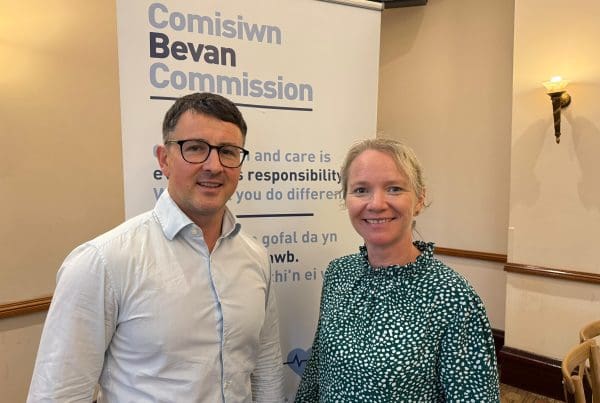


Emma Davies, Holly Brislen and Nicola Vickers
Betsi Cadwaladr University Health Board

Background
The BCUHB Community Stroke Prevention Team aims to reduce the incidence of stroke focusing on primary prevention, secondary prevention of stroke and education for staff, patients and public.
- In the UK, around 100,000 strokes occur each year, with this number increasing year on year.
- In the UK, approximately 30% of people who have a stroke will experience another one within 5 years (See figure 1).
- It is thought that around 80 – 90% of strokes are preventable with the early identification and effective management of stroke risk factors.
- Wales has the highest percentage of people with prevalent stroke risk factors. Many stroke survivors experience emotional distress and anxiety regarding risk of reoccurrence. They may struggle to manage risk factors due to perceived lack of support.
This project intends to:
- Increase satisfaction of stroke survivors.
- Empower of stroke survivors and carers to manage stroke risk factors.
- Reduce incidence of second stroke.

Figure 1: Incidence of Second Strokes
Aims and Objectives
Aim: Reduce the incidence of secondary stroke in North Wales and improve patient experience and support following their stroke.
- Objective 1: To improve patient knowledge regarding stroke prevention and improve patient experience in regards to stroke prevention education.
- Objective 2: To ensure that the stroke multidisciplinary team have a clear stroke prevention pathway to refer patients to the programme that are at high risk of secondary strokes.
- Objective 3: To develop the Stroke Prevention team’s scope to deliver high quality secondary prevention education to stroke survivors and carers in North Wales.
Approach
Co-design of Programme
Qualitative and quantitative feedback was gathered from stroke survivors and carers on concerns and experiences of stroke risk. Input was sought on programme content and delivery through stroke survivor groups in North Wales, alongside surveys via MS Forms. Partners within the stroke pathway were also engaged. This evidence informed the final programme design.
Delivery
The programme comprised four weekly sessions (1.5 hours each) delivered in June–July 2025. Seven patients and carers attended, with each session focused on a specific theme. Sessions were held in an accessible community venue with parking, facilities and refreshments. Recruitment was through referrals from the East Integrated Health Community stroke pathway.
Evaluation
A mixed-methods approach was adopted, incorporating:
- Feedback from patients and carers.
- Feedback from referring professionals.
- Reflections from the Stroke Prevention Team on programme delivery and participation.
Outcomes
The project extended the stroke pathway by offering additional support to stroke survivors and carers in North Wales. Implementation is planned across all three Integrated Health Communities (IHCs) in the region. The initiative brought together survivors, carers, the wider stroke multidisciplinary team and the Stroke Prevention Team, ensuring high-quality care and a holistic approach to secondary stroke prevention. The model has significant potential for wider adoption across Wales.
Impact
Seven participants (four patients and three carers) took part in the programme. Feedback was collected verbally and via Microsoft Forms.
- 100% agreed the content and duration were appropriate and clearly presented.
- 75% reported feeling equipped with the knowledge to reduce their future stroke risk, with timing judged appropriate post-stroke (Figure 2).
- 100% valued the face-to-face format and found the venue suitable and accessible.
The average cost of a stroke patient from admission to discharge is estimated at £23,315. Preventing just two strokes annually through this programme could save the health board approximately £46,630, demonstrating both health and economic benefits.

Figure 2: Patient Feedback
“I’ve just spoken to a client who attended your sessions. She thought it was brilliant and enjoyed meeting the other people and has lots of numbers to contact people if needed.”
Referrer
“Meeting others with the same problem helps. I enjoyed your kind helpful meetings, it helps our partners understand what we are living through! It’s a shocking shock to become a stroke survivor.”
Service User
“Telling others with the same problem, helps you understand- you are not alone. Your kind meetings helped me gravely. So a big huge thank you.”
Service User
“These meetings were invaluable, much as meeting other stroke survivors as for the excellent information we received.”
Service User
Conclusions
- The project was well received by stroke survivors, referrers, and stakeholders, and successfully enhanced patient experience within the BCUHB stroke pathway. It has added a valuable new component to local stroke services, with potential for wider roll-out across North Wales.
- With an estimated 17,000 stroke survivors in the region, targeting those at greatest risk of recurrence offers the greatest community benefit. Participant feedback also highlighted new areas for future focus—such as the role of sleep and stress management in reducing stroke risk—which had not previously been prioritised.
- The current programme template can be readily implemented across North Wales by stroke specialist nurses, including Life After Stroke Nurses, supporting consistent and holistic secondary prevention.