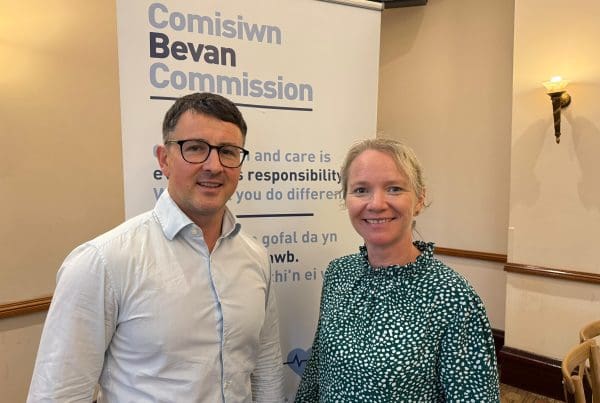


Elizabeth Hallett and Kayleigh Poulsom
Aneurin Bevan University Health Board

Finalist – Primary Care Team of the Year, Welsh Pharmacy Awards
Finalist – PCPA Primary Care Pharmacy Team Award, PCPA Excellence in General Practice Pharmacy Awards 2025
Background
ABUHB supports 1,800 beds across 43 care homes, where residents are typically older, frailer, and living with multiple comorbidities. Over 80% of people aged 75+ take at least one medicine, and more than a third take four or more—figures even higher in care homes—raising risks of falls, cognitive decline, and hospital admissions.
Polypharmacy contributes to harm, with 6.5% of UK acute hospital admissions linked to medicines. NICE recommends regular medication reviews, but many residents miss timely reviews due to service pressures.
This project aimed to evaluate the impact of a clinical review of care home patients by a dedicated care home pharmacist.
Aim
Improve medication safety, patient outcomes, and reduce medicines waste in care homes through structured, pharmacist-led medication reviews.
Objectives
- Deliver detailed medication reviews for care home residents, focusing on high-risk medicines, dose optimisation, and deprescribing.
- Measure impact on patient safety (e.g., reduced adverse effects, improved ACB scores, fewer hospital admissions).
- Optimise prescribing and reduce waste through in-depth polypharmacy reviews with appropriate and improved compliance.
- Assess impact on GP workload by reducing appointments and care home visits.
- Engage stakeholders to co-produce and evaluate the project for continuous improvement.
- Develop a standardised toolkit to support consistency and scalability across ABUHB and beyond.
Approach

Outcomes
New Clinical Service
Pharmacist-led medication reviews introduced for care home residents and Complex Care Team patients, delivering personalised pharmaceutical care closer to home.
Structured Toolkit
A comprehensive implementation resource with guidance, templates, and training materials to support service spread and scale.
Protocols & Policies
Developed PRN and OTC medication guidance, with educational materials to promote safe, autonomous medicine use.
Impact
(PDSA cycle 1,2 and 3)
Residents reviewed 341
Potential ACB score reduction: 55 across residents contributing falls reduction risk
(PDSA cycle 2 and 3)
- 40 Medicines stopped
- 64 less administrations per day across 89 residents freeing up nursing time
- 34% of residents aligned to 28-day cycle to reduce waste
- 7 high risk drug interventions
- 12% formulation changes to aid compliance
- 51 PPIs reviewed
- ACB score reduction of 10 across residents reviewed
- Stopping 40 medicines (≈ 0.5 kg CO₂ per box) saved 20 kg of CO₂ — roughly the same as driving an average petrol car 100 km
- 267 GP appointments saved
- Rectified doses, ordering of up-to-date monitoring and specialist advice for high-risk medicines
- Resident previously chewing all tablets – now compliant with medication in a suitable form


Conclusions
- Safer, personalised medication for residents
- GP time saved via pharmacist-led reviews
- Empowered care home staff through education
- Reduced medication waste and environmental impact
- Enhanced patient safety
- Care brought closer to home
- Developed a replicable toolkit for medication reviews