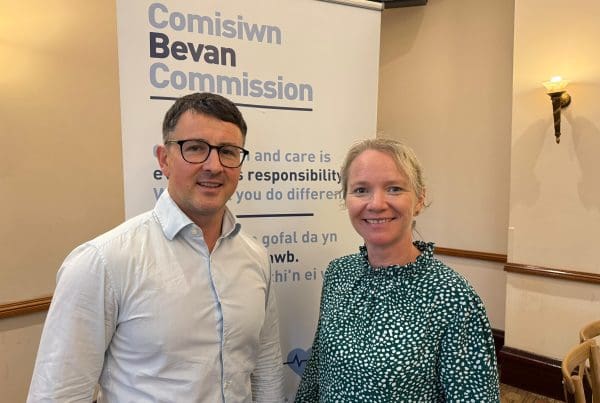


Emma Dobson (HDUHB), Sophie Bassett (CTMUHB) and Erin Hugo (PTHB)
Hywel Dda University Health Board, Cwm Taf University Health Board and Powys Teaching Health Board
Background
As frailty and dementia rise among older adults (See graph), staying safe at home becomes more challenging. Traditional care can’t always provide real-time support—potentially leading to increased risks and reduced quality of life.
Personal alarm watches can offer a smart solution:
- Continuous monitoring
- Instant emergency alerts
- Peace of mind for users and caregivers

Aims and Objectives
Enhance safety, promote independence, and improve quality of life for vulnerable populations—particularly people living with dementia in Wales—through wearable technology.
Objectives
1.Assess Acceptability: Understand how the watches are received by participants, caregivers, and professionals.
2.Evaluate Usability: Assess ease, reliability, and practicality in daily life.
3.Measure Impact: Measure effects on safety, independence, and overall quality of life.
4.Establish Viability: Provide evidence to support integration into health and care systems.
Approach
The project dealt with several challenges:
- Technical issues such as signal loss in rural areas, SIM card problems, and complex setup.
- Battery life and non-standard chargers posed barriers, especially for those with cognitive decline.
- Patients often needed prompting or support to wear and charge the device.
- Volume limitations made it hard for those with hearing impairments.
- Some watches were returned due to anxiety or relocation to assisted living.
- Families sometimes underutilized features due to lack of training or time.
- Cognitive status influenced acceptance and consistent use.
Evaluation Approach
Mixed Methods: Combining data and lived experience to assess impact.
Quantitative: Short questionnaires from participants and caregivers measured safety, independence, and usability. CORE-10 PROM
Qualitative: Interviews and case studies captured real-world feedback.
Impact
- Enhanced Safety & Independence:
Real-time location tracking allowed patients to continue daily routines safely, reducing the risk of wandering and accidents. The devices helped preserve autonomy and independence while offering reassurance to caregivers. - Improved Family Experience:
Relatives, especially those working full-time or living far away, experienced greater peace of mind. - SOS contact setup was intuitive. Fall detection triggered alerts and calls to emergency contacts. Geo-fencing and Wi-Fi boundaries helped monitor movement. Pedometer and reminders added functional value.

Clinical Outcomes
The CORE-10 assessment for the CTM UHB cohort showed a decrease in clinical score from 8 to 6 over 8 days, indicating a positive shift in mental health status, with reduced anxiety and distress, though sleep difficulties and suicidal ideation remained concerns.
Conclusions
- Involving patients, carers, and community representatives throughout ensured the solution addressed real needs and preferences.
- Technology acceptance varied, influenced by cognitive ability, anxiety, and support systems—highlighting the need for tailored education and setup support.
- Reliable connectivity and simple device setup are essential, especially in rural areas and for users with cognitive challenges.
- Ongoing involvement from carers and clinicians underpins successful adoption and sustained use.