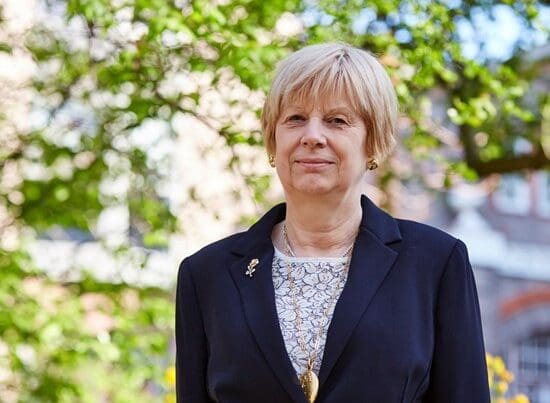



By Professor George Crooks OBE, Bevan Commissioner
The challenges in delivering high quality safe and effective health and care services have never been more acute. The cost of delivering modern healthcare continues to rise almost exponentially as advances in science allow us to treat and often cure conditions that in the past could only be managed through palliative care. These scientific advances almost always have a high price and all healthcare systems wrestle with the challenges of deciding how best to invest its resources. If health matters we must confront these realities honestly.
The demand and capacity challenges are particularly acute, brought about by multiple factors including the demographic changes in our population and the rise in long term conditions including multimorbidity and frailty. When you add the workforce challenges, including the recruitment and retention of staff, and the requirement to upskill the existing workforce, it is not difficult to understand why things feel all too difficult at present!
It is important to emphasise that this is not simply a Welsh or a UK problem, it is the same in every nation around the world. Most of these challenges are not new, they have been with us for more than 30 years, but one emerging factor now demands our attention if we are to move our health and care system into a better place.
Over the past ten years we have seen a significant change in the public’s expectations when it comes to the services offered by our health and social care system. The days of people being satisfied and grateful for any service being delivered is long gone. People’s expectations are now much higher and they find it difficult to understand why services do not recognise and cater for their personal circumstances.
The fact that we live in an increasingly connected world where digital technologies are playing a prominent part in our day-to-day lives creates opportunities for both health and social care services to respond in new and innovative ways. This has led me to coin the phrase “We require 21st century solutions to address our 21st century problems”. Continuing to pour time, effort and money into approaches that served us a decade or two ago is, at best, a sticking‑plaster response to a deep and complex wound.
To move forward constructively we need to make some bold decisions. If we simply continue to manage, for example, long term conditions in the conventional way we do today the healthcare system will run out of capacity to manage patients with cardiovascular or respiratory diseases in the next few years as the number of new patients continues to rise and those living with their disease live longer.
So, how do we cope? We cannot simply employ more doctors, nurses or therapists. The only affordable solution is to activate and empower our citizens to make better informed health and well-being choices so that they do not increase their risk of developing a long-term health problem while at the same time creating an environment where people can actively manage and deliver more of their own care. This seems easy to say but is very difficult to deliver as it requires a move away from the maternal or paternalistic medical model of health care that stood the NHS in good stead during its first 50 years of existence.
However, we do have the tools to make this happen through the advent of digital technology innovation.
To unlock the significant benefits that digital technologies can bring you first have to ensure you place the individual at the centre of all that you do. User centred design is going to be fundamental if we hope to maximise the benefits from any future financial investments in digital solutions. Services must be built around users, not organisational needs, and the design of a digitally enabled service matters as much as the technology itself.
We know that the more things we know about an individual patient or service user the easier it is to personalise the services to meet their needs and so increasing the likelihood that the solution will be used. To do this we require data. For too many years the only healthcare data that the NHS trusted was the data it generated itself. We now have the capability to pull data from multiple public sector systems and from other sources to better understand the lived experience of our citizens. This allows us to build digital tools and products which can be put in the hands of our population to allow them to curate their own data and make better informed health and well-being choices. It can allow them to access services on their own terms, tell their story only once, and access services at the most appropriate time to meet their individual needs. This future is not imaginary from a technology point of view; these capabilities exist today. However, it will require a cultural shift to secure the benefits that this approach can bring.
If citizens were given the opportunity to hold their own data and give permission for it to be shared with whoever they choose, it could transform how we deliver health and care. If health matters then citizen‑centred data sharing could be one of the most important steps we take toward a more responsive, prevention‑focused system.
About the Author, Professor George Crooks OBE
George Crooks is a Bevan Commissioner and Chief Executive of Scotland’s Digital Health & Care Innovation Centre, with a distinguished career spanning clinical practice, national urgent care leadership, and digital transformation across health and care systems.