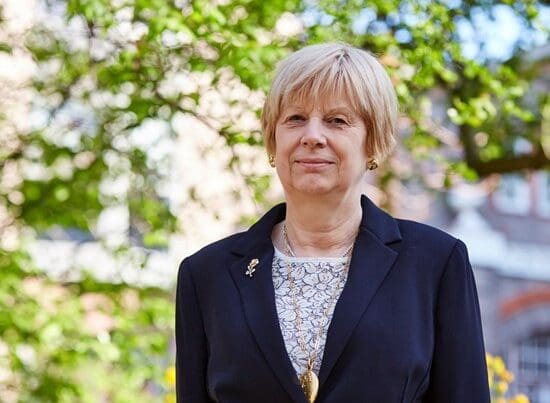



By Sue Evans OBE, Bevan Commissioner
Where would we be without the social care workforce in Wales? It is a question we rarely pause to ask, yet the answer underpins the safety, dignity, and independence of thousands of people every day. If we are serious about building a fair and thriving Wales, we must start by recognising that health matters — and that social care is inseparable from the health of our nation.
The primary role of social work and social care is to empower and protect those children and adults who may be at risk of harm or loss of independence. Those risks can arise from neglect, abuse, frailty, illness, disability, or simply a lack of support.
For many of us working in the public sector, it is easy to take for granted that our children will eat healthy food, live in warm homes, receive a decent education, and be free from neglect or abuse. As adults, we expect to manage our own personal care, finances, and daily lives, and to enjoy social, educational, and leisure activities without assistance.
But this is not the reality for everyone. And in this piece, I am focusing on adults.
Most adults want to experience “what matters” to them — a core principle of the Social Services and Well‑being (Wales) Act. Many can achieve this through their own networks of family, friends, and colleagues. But for adults who are frail, living with illness or disability, or at risk of harm, support becomes essential.
When those natural networks are absent or insufficient, the adult social worker steps in, assessing what outcomes the person wants to achieve, offering advice, and arranging the right support. Their task is to protect human rights, maximise independence, and ensure the person retains voice and control wherever possible.
Yet the system they work within is not always aligned to this purpose. Tensions often arise between NHS professionals and social workers when a vulnerable adult is deemed “medically fit” to leave hospital.
The political and operational focus on hospital activity does little to support the social worker who must ensure safety and independence beyond the hospital door. Rushed discharges can create real risks when care and support plans are not yet in place, plans that may require coordination across families, voluntary organisations, and commissioned social care workers.
Contrary to much of the public narrative, Social Services is far more than a discharge mechanism for the NHS. It is a critical public service, rooted in local government, with the ability to connect seamlessly with housing, education, leisure, community services, and the third sector. This local reach enables holistic assessments and coordinated responses that reflect the full complexity of people’s lives.
If we are serious about improving outcomes, the system needs a stronger focus on community‑based health and social care, preventing hospital admissions rather than managing delayed discharges. Many regions already have intermediate care services and community hubs that bring the third sector into preventive and supportive roles. With an ageing population in Wales, strengthening these out‑of‑hospital resources is essential, and funding must follow that ambition.
Some argue that formal structural integration between health and social care is the answer. But there are many ways to achieve better coordination without the disruption of major reorganisation. Wales already benefits from regional partnership arrangements that could be strengthened to deliver shared outcomes.
As Dr Hugh Alderwick’s analysis of OECD health systems reminds us, there is no perfect structure, social and economic factors are too complex. The priority should be improving the system we already have, not chasing an elusive ideal designed far from the frontline.
Language also matters. The NHS often talks in terms of patient flow, pathways, and process, shaped by political pressure on waiting times and treatment numbers. Social Services has its own performance measures, but far less public scrutiny. The result is predictable: political and public pressure drives funding toward the NHS, squeezing local authority and third sector budgets. Yet it is precisely that local capacity, the community support, early intervention, and preventive services, that reduces demand on the NHS and helps Wales cope with an older, less healthy population.
So where does this leave us? With a truth that is both simple and urgent: Wales cannot deliver the health and wellbeing its people deserve without a strong, valued, and properly supported social care workforce. They are the quiet infrastructure of independence, dignity, and safety and their contribution is too often invisible until the moment it is missing.
As Wales approaches the next Senedd elections, there is an opportunity for every political party to recognise this reality. Not through slogans or structural upheaval, but through a clear commitment to strengthening community‑based care, investing in prevention, and valuing the workforce that holds so much of our social fabric together.
Because health matters. Social care matters. And the choices we make now will shape the Wales we become.
About the Author, Sue Evans OBE
Sue Evans OBE is a Bevan Commissioner with three decades of leadership experience across health, social care, and local government in Wales. She previously served as President of ADSS Cymru and Chief Executive of the Care Council for Wales, helping to establish Social Care Wales, where she was also CEO. Now retired, she remains active through voluntary work and as an Associate Member of ADSS Cymru. Sue received an OBE for services to social care in June 2024.