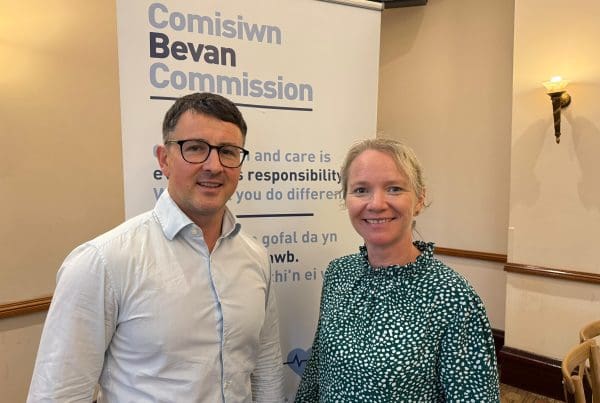


Jessica Rees and Gaynor Slocombe
Cwm Taf University Health Board
Finalist – Patient Care Pathway, Secondary, Primary, Specialist or Community Care Award, Quality in Care Diabetes Awards 2025
Finalist – NHS Wales Awards 2024
Background
Active foot problems in people living with diabetes have a huge financial impact on the NHS whether it is for inpatient costs, outpatient costs and implications at secondary and primary care levels. Kerr et al (2019) estimated that the cost of DFU (diabetic foot ulcers) and amputation in England in 2014-2015 is between £837 million and £962 million. Furthermore, over 80% of amputations (NICE 2019) and 80% of deaths within 5 years are linked to diabetic foot ulcers (Kerr 2012).
Length of hospital stay for a person with DFU was estimated to be 8.04 days longer than someone with diabetes free from ulceration. Despite evidence of the risk of admission and the morbidity associated (NDFA, NADIA) and recommendations for specialist podiatry to intervene early, evidence suggests that only one third of these patients with active foot ulceration at the time of admission have a foot examination within 24 hours of admission (NHS Digital 2017).
With no dedicated podiatry inpatient service, we were not providing timely responses, as recommended by NICE NG19 (2019) and IWGDF (2023). In addition, there was no support and education for ward staff on foot risk screening for those people with diabetes on admission to hospital and no point of care contact for acute diabetic foot presentation at Emergency Department/Same Day Emergency Care Unit.
Aims and Objectives
Diabetic foot disease is a significant health problem leading to amputations and death. This project aimed to improve care for patients with diabetic foot ulcers by establishing a dedicated inpatient podiatry service.
Project objectives
- Provide timely podiatry care for diabetic foot ulcers seeing all referrals within 1 working day (NICE NG19)
- Coordinate multidisciplinary management
- Educate staff on diabetic foot risk assessment and management
Approach
- Following the submission of a business case from Lead Diabetes Consultant in Diabetes, Head of Service for Podiatry and Clinical Lead for Acute Foot for funding from Value Based Healthcare Additional Welsh Government Funding in 2021, funding was secured for 1-year fixed term for 1 WTE band 7 acute inpatient podiatrist in each DGH (3 WTE in total). Following the inability to recruit for 12-month fixed term contracts at 2 DGH sites, the project was undertaken by secondment of a band 7 podiatrist in RGH from April 2023 for 1 year, and subsequently extended until March 2025.
- Engagement with stakeholders including inpatient diabetes team, ED and SDEC teams, senior nursing team, ward managers and inpatient nursing teams, helped develop and expand awareness of new service, referral pathway/criteria and the implementation of training on diabetic foot.
- Use of data collection to review whether the service is providing expected benefits to service users and impacting positively on appropriate and timely care. This includes active collection of PREMS and pending collection of PROMS to determine patients’ experience of service and also patient stories to capture the impact of the project on their inpatient management of acute diabetic foot disease.
Outcomes
New service model implemented in 1 DGH site at Royal Glamorgan Hospital with aim to respond to 80% all inpatient referrals for acute diabetic foot disease by March 2025 including provision of on call service at ED/Same Day Emergency Care Department.
Impact
- Reduction in Length of Stay for patient admitted with DFU
- Reduction in avoidable admissions for DFU
- Improvement in time take for DFU patients to be reviewed (as per NICE NG19 within 24 hours)
- Reduction in re-admission following inpatient stay (30 days) for DFU
- Reduction in Hospital Acquired DFUs
- Improved Patient Reported Experiences
- Improved experience of wider MDT managing DFU
- Increased awareness of diabetic foot risk and management amongst inpatient teams


Conclusions
- Timely and efficient treatment and planning
- Improved MDT working
- ‘Getting it right first time’
- Avoidable admissions
- Reduction in bed days
- Improved patient experiences and outcomes