

Cathryn Lewis
Velindre University NHS Trust
Background
Brain tumours are a relatively rare form of cancer, accounting for 3% of cancer diagnosis within the UK. However, these tumours represent a disproportionately high burden of disease due to low survival rates and significant impact on quality of life. Both diagnosis and treatment can result in multiple complex supportive care needs with disease progression being rapid and unpredictable.
It is widely recognised that multidisciplinary assessment is necessary to support this cohort of patients.
Aims and Objectives
- To carry out a pilot occupational therapy (OT) and physiotherapy (PT) outreach service which establish the quality, safety and financial value of having direct and timely intervention.
- To map existing services in communities and establish the unmet needs of these patients.
Approach
The project completed a mapping exercise of the current service provision for patients in both local health boards and local authorities across the area. This involved gaining an understanding of their inclusion and exclusion criteria, waiting times and skills set within their teams.
We then worked with existing patients with a neuro oncology diagnosis to understand their needs and their experience of community services.
A pilot was designed to trial a service and following feedback and review from patients and professionals this was further adapted and carried out over a 4 week period.
Outcomes
A range of outcome measures were completed to demonstrate the impact of the pilot service.
- Quality of Life (EQ5D5L)
- Clinical Function (AusTOMs)
- Patient Experience

Average % improvement based on pre and post intervention scores for 4 individuals (*2/4 individuals for health)
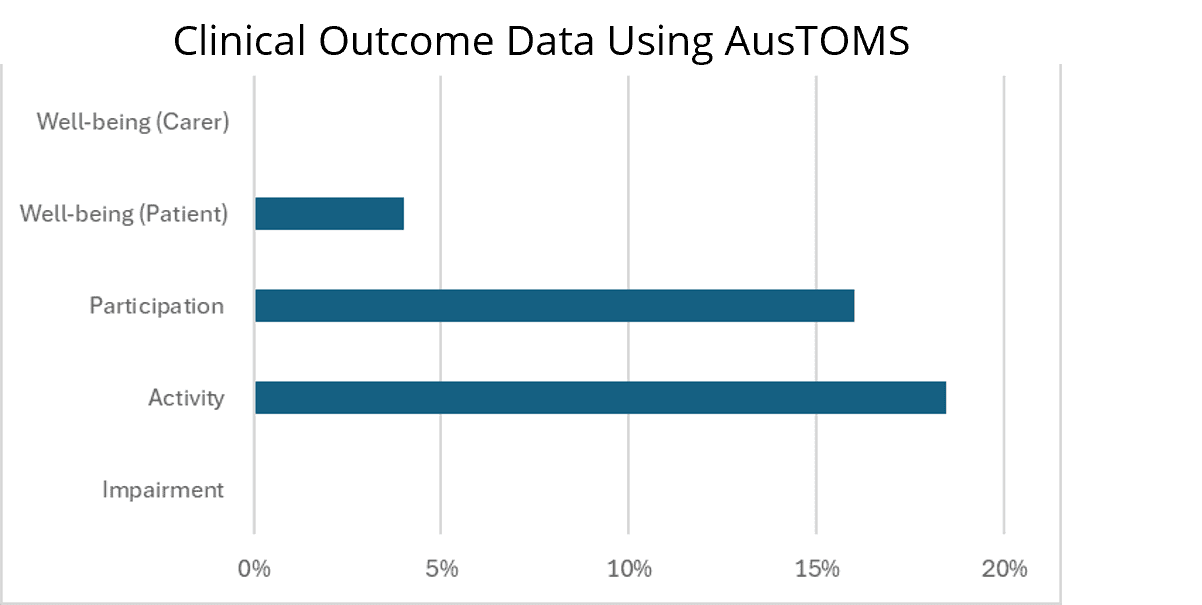
Average % improvement based on pre and post intervention scores for 5 individuals

The Timed Up and Go Assessment both standard and Dual Task Load, demonstrated that all patients exceeded the normal score for their age range. This indicates a high risk of falls in this patient group.
Impact
The data from EQ5D5L completed both pre and post intervention demonstrated overall improvements for patients in mobility, self-care and anxiety / depressions domains.
Clinical outcomes identified that all patients required intervention related to their mobility thus demonstrating the high risk of falls within this cohort. Interventions to improve transfers and carry out self-care were required in 50% of patients. All patients improved their score in either Activity Limitation or Participation domains.
A patient questionnaire reflected that 100% of patients scored the maximum level of satisfaction when considering the pilots’ usefulness, relevance and their overall experience.
“I found the experience to be quite emotional in how well I was supported.”
“Really useful in own environment as [patient] can put on a bit of a show when in hospital.
“You must carry on with it.”
Conclusions
- Majority of referrals were needed at a later stage of disease than anticipated indicating the need for a review of current service provision.
- Clear evidence of risks of falls and the impact of dual tasking.
- All patients within pilot had unmet allied health professional needs, including speech and language therapy and dietetics.
- All patients required onward referrals for equipment and services that would otherwise have been missed.