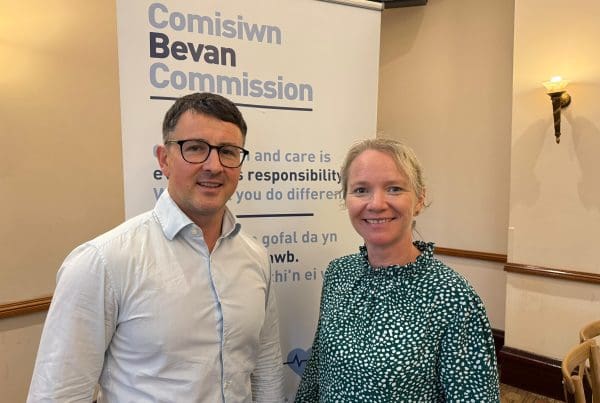


Lucy Brown, Jo Edwards, Diane Harrott and Alun Morgan
Carmarthenshire County Council

Winner – Working in Partnership Award, Social Care Wales Accolades 2025
Background
Housing-related support in Carmarthenshire had become largely reactive, focused on crisis response rather than prevention. Rising living costs, a shortage of suitable housing, and increasing homelessness highlighted the urgent need to shift resources upstream. Early Doors was developed as part of a new Community Preventative Services model to provide early, barrier-free access to housing support, working alongside health, wellbeing and financial services. The project builds on strong collaboration between the local authority, third-sector partners and communities. By reaching citizens earlier, improving service visibility, and empowering people to make informed choices, Early Doors helps to reduce crisis demand, promote stability, and improve long-term wellbeing.
Aims and Objectives
- Increase early access to housing-related support.
- Improve awareness and service visibility.
- Build citizen resilience, preparation, and empowerment.
- Foster collaboration across services and challenge barriers.
Approach
- Co-produced with citizens, housing providers, and wider stakeholders to ensure inclusive and person-centred design.
- Community outreach: 402 engagement activities across schools, hospitals, Hwbs, town centres, and rural communities.
- Central referral ‘Gateway’ introduced for streamlined access to support.
- Integrated pathways with health, financial wellbeing, and Community Home Support Services to address linked needs.
- Tailored local campaigns and accessible resources to improve awareness and uptake.
- Pilot of early relationship support to address one of the main drivers of homelessness before it escalates into crisis.
Outcomes and Impact

- 74% year-on-year increase in early access referrals (Apr–Sept 2025).
- 1,527 people engaged through community events and drop-ins (157% increase), including significant outreach in rural areas.
- Strengthened collaboration across housing, wellbeing and financial support services, reducing crisis presentations and improving long-term stability.

- 91–95% report improved resilience & empowerment.
- 98% satisfaction.
- Increased self-reliance & skills (≈60%).


Conclusions
Prevention works
- Early intervention reduces crisis demand and improves wellbeing.
- Barrier-free, person-centred access empowers citizens to take control of their housing and wellbeing needs.
- Collaboration across housing, health, and wellbeing services delivers better outcomes for individuals and communities.
- Partnership working and co-production create trust, shared learning, and lasting change.
- The Early Doors model is scalable and replicable, offering a sustainable approach for other areas across Wales.