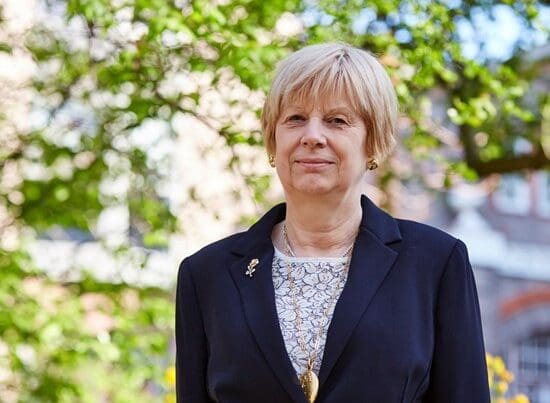



By Professor Kamila Hawthorne MBE
The pressures facing the health of the population in Wales are visible in every community: rising levels of ill health and flattening life expectancy curves, together with widening inequalities, exhausted and demoralised NHS and social care staff and a system that too often reacts to crisis rather than preventing it. Our patients complain that they can’t get to see their GP easily, and that the wait for secondary care appointments and treatments is too long.
After 37 years as a GP in the NHS, I have seen extraordinary changes in medicine, technology and the needs of our communities. We can do so much more for our patients, but we are also seeing significant and steady rises in chronic disease prevalence, multi-morbidity and unhealthy lives. Meanwhile, the fundamental design of the NHS has barely shifted in over 70 years. It remains shaped around acute care, not the realities of modern Wales, and the system is now buckling under pressures it was never built to withstand.
There is good international evidence for the efficacy of primary care on population health, that means it must sit at the heart of every serious conversation about the future of our health and care system here in Wales. If we want a fairer, healthier Wales, we must begin where most care begins in our communities – in primary care. We need to recognise that ‘health matters’ for the health and economy of Wales – not as a slogan, but as a principle that should shape every decision we make. Small changes or ‘tweaks’ will not solve our problems – we need transformative change.
The reality we face
The data is stark. Wales is ageing. Chronic disease is rising. Poverty and inequality, which are consistently among the highest across the UK, are driving illness at scale. Twenty‑three percent of our population lives in poverty, with 29% of children in Wales living in relative income poverty. In these communities, people live 10–17 fewer healthy years, and avoidable mortality is almost four times higher. Meanwhile, the number of people living with major illness is projected to grow 3.5 times faster than the working‑age population.
These inequalities are not inevitable. The Bevan Commission, Public Health Wales, the Health Foundation and the Welsh Government’s own scientific advisers all point to the same evidence: targeted prevention, early‑years support, improved primary care access and place‑based interventions deliver the biggest health gains. In England, the NHS Confed (Aug 2023), reported that for every £1 spent on primary or community care by Integrated Care Boards, local economic output will increase by £14 – meaning that greater economic growth effectively pays for itself through increased tax receipts.
It is well recognised that general practice remains one of the NHS’s greatest assets: skilled at understanding the full mix of issues people bring, well prepared to manage holistic care for our increasingly complex patients, rooted in communities and uniquely placed to deliver continuity of care. Yet primary care receives just 7.4% of the NHS budget, even less than it did 20 years ago despite the growing needs.
The result is a system under intolerable strain, with both the General Medical Council (GMC) and The Health Foundation reporting that GPs across the UK have the highest levels of stress across the whole medical profession (including in comparable European countries), the lowest satisfaction with work‑life balance and the greatest intention to leave patient‑facing roles. In Wales, the pressures are compounded by workforce shortages, underfunded premises and a contract model that no longer reflects the realities of modern general practice.
In the face of ever-increasing demand for healthcare, there is a real need to increase the number and length of GP appointments so that patients can be seen faster, and to do that we need many more GPs alongside a more integrated multidisciplinary support team for GPs based around patients’ needs. We also need more GPs to manage the increasing complexity of patients we are managing in the community, and to support some of the community-based changes needed in healthcare. Social care, patient education and social prescribing services linked into practices are also important in helping patients find the best solutions for them, especially those who present bio-medically, but whose problems are rooted in non-medical factors such as housing, relationships, employment, poverty and loneliness.
Without significant changes in prevention, service design and community-based care, we will continue to see accelerated and unmanageable demand across the system, which will soon be overwhelmed. These changes need to start now, building upon the commitment from the new Welsh Government, which has recognised the importance of greater investment annually for primary care alongside engagement with patients, communities and other health and care professionals.
Transformation, not tinkering
If we want a sustainable NHS, we must redesign primary and community care from the ground up, to meet people’s needs where they live, work and play. We must ensure that we keep those aspects of patient care that are evidence-based and effective, while redesigning the service for those patients who are more complex and require a co-ordinated, personalised and multi-disciplinary care pathway to remain healthy.
At the same time, we need to focus on prevention and ways to keep our communities healthier for longer. This is not about marginal gains or incremental improvement. It is about shifting the centre of gravity of the system, improving services to suit the needs of our ever increasingly complex patients and bringing them into the community and nearer to the patient.
The service I see for the future will consist of four basic layers, the base of (or first of these) which will retain current universal access to healthcare. This will be done largely through primary care that includes general practice, opticians, pharmacists and dentists, as well as community-based teams addressing social care, mental health and musculo-skeletal health. This will provide an everyday acute service and chronic care for non-complex conditions and will be open to all for both same-day and routine care appointments. It will also provide routine vaccinations for children, pregnant mothers, older people and those with chronic conditions and will remain based on general practice registers of patients.
Above this existing base layer should be a ‘community health service’, or second layer, that spans several general practice footprints in size (for example, GP cluster sizes) and contains GP-led multi-disciplinary teams of health and social care professionals for those patients who require a more personalised care package. This would include a community frailty service (working 24/7) and services for patients with multiple long-term chronic conditions. It would also include other services dictated by local need, for example, patients from vulnerable groups such as homeless people, asylum seekers, looked-after children and prison communities.
Secondary care/ intermediary services will also be based in the community, as they are currently, including musculoskeletal, palliative care, pain clinics, podiatry and dietetics. Community diagnostic services would also be available at this level, sited in community health centres or community hospitals, an expansion of the Rapid Diagnostic Centres that already exist in Wales. Community mental health teams and community women’s health teams also operate at this level. Out of hours care should be run by GP co-operatives. This community health service would also be the layer that integrates horizontally with local authority services, such as social care and housing, and voluntary sector and community services, including referrals to and from social prescribers.
Above this would lie the existing secondary care (the third layer) and tertiary care centres (the fourth layer), but everything that could possibly be run in the community – including most outpatient clinics – would come out of general hospital settings and be sited in either community hospitals or community health centres.
In many places, aspects of these community-based services already exist, but they are not co-ordinated, patient records are not shared and there are many wasted efforts and silos as different services contact the same patient. In comparison, a co-ordinated personalised care approach would be both safer and more efficient. Bringing everything together would be much better for the patient and could be ‘held’ by GP practices, allocating to others as appropriate but with a special focus on managing complex cases.
The prevention agenda will need to be viewed from both a primary and a secondary prevention stance, incorporating general practice and other primary care services and working alongside public health services to ensure prevention initiatives are co-ordinated and get the best value for effort. Patient education, effective communication and dialogue with the public and with community leaders is also a vital part of this transformation, to ensure people are informing and shaping the changes and there is local accountability to people in our communities.
For me, transformation means:
- A stronger primary and community care voice that represents communities as well as primary care in national leadership, shaping decisions rather than reacting to them.
- A new GP contract that reflects modern practice, funds continuity of care and weights resources toward areas of greatest deprivation.
- Resources following work that is moving into the community, so that at least 11% of the NHS budget is allocated to primary care (as previously, in 2008).
- A workforce plan to increase the number of GPs and other supporting professionals in the NHS, including both increased training numbers as well as retention schemes, improved working conditions, the provision of occupational health to NHS staff in general practice, and modernised premises.
- Careful re-working of multi-disciplinary teams, ensuring everyone is working to their role description and in co-operation, with time set aside for appropriate, safe supervision if needed.
- Co‑located neighbourhood health services, bringing together GPs, community teams, diagnostics, mental health, social care and the voluntary sector.
- Digital systems that function, with shared and unified patient records, and secure, seamless communication (integrated working with patients will not work without this). An NHS App that provides patients with the facility to communicate with their practices to book appointments, request prescriptions, see their test results and letters and ask questions.
- A recommitment to the principles of prudent health and realistic medicine, with action to reduce low‑value medical interventions and wastage, co-ordinated personalised care to complex patients and supporting shared decision‑making.
- An integrated national prevention policy that incorporates the public, local public health services, Public Health Wales and other key partners, such as education and local government.
- A commitment to improving capacity for and linking more effectively with social care, both at home, and residential/ nursing home places, to find the best solutions. This will also reduce the pressure on A&E, admissions and ambulance waiting times.
- A cross‑government approach to the social determinants of health, including housing, poverty, early years and fuel insecurity, without which the NHS will remain trapped in crisis response.
This is not a ’nice to do’ list. It is the essential minimum required to stabilise the system so that primary and community care can work at its best for patients.
The barriers are real – but so are the opportunities
Transformation is difficult. It requires honest conversations about decommissioning low‑value care, reinvesting in prevention and primary care and concentrating on teamworking and co-ordinating care. It will require changes to funding streams at a time of fiscal constraint. It may result in choices that may not deliver immediate political wins. It requires transparency, communication and genuine partnership with clinicians and communities.
But looking the other way is not an option. The alternative is worse; a system that continues to buckle under demand, losing staff, public trust and the ability to deliver the care that the people of Wales deserve.
There is no shortage of vision. There is no shortage of evidence or committed clinicians ready to lead change. What I am suggesting is not rocket science. What has been missing is the political will to redesign the system around the realities of modern Wales.
The question now is this: Will Wales choose to transform primary and community care, not in rhetoric, but in action, so the nation can build a fairer, healthier future?
Because if we always do what we’ve always done, we’ll get what we’ve always got.
And Wales deserves better.
About the Author, Professor Kamila Hawthorne MBE
Professor Kamila Hawthorne is a Bevan Commissioner, the immediate past- Chair of the Royal College of General Practitioners (RCGP) Council, Emeritus Professor of Medical Education and a retired GP.