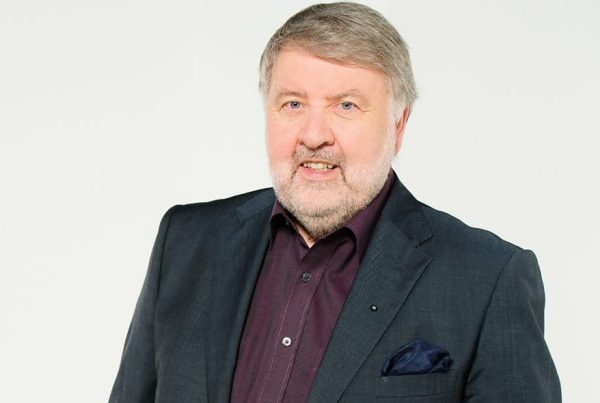



By Professor Derek Feeley, Bevan Commissioner
In his recent major speech on social care reform, Prime Minister Andy Burnham revealed that he had asked the crossbench peer Baroness Louise Casey to bring forward her review of social care from 2028 to 2027, in order to “rise to this challenge with the urgency it requires.” The review, said Mr Burnham, will explicitly outline a blueprint for delivering the Labour Party’s promise to set up a National Care Service that provides consistent care across England. Similarly, the Plaid Cymru manifesto contained a commitment to work towards a National Care Service integrated with NHS Wales.
This opinion piece explores whether the establishment of a National Care Service in any of the four nations of the United Kingdom is likely to meet the future needs of people requiring social care support. I must start with a declaration of interest; I chaired the Independent Review of Adult Social Care in Scotland, which recommended a National Care Service to the Scottish Government in February 2021.
I saw the creation of a National Care Service as an essential reform in Scotland for a number of reasons, including national level integration with the NHS and clearer accountability and assurance for Ministers, parliament and the public. It would align with national strategy and funding decisions, remove regional and local variation – in other words, the ‘postcode lottery’ – and introduce national terms and conditions for all staff. It would also serve as a vehicle to scale up and spread best practice, which is almost impossible in the current system.
The Prime Minister’s statement contains echoes of the same rationale, and I would contend that similar challenges exist across Wales. Indeed, Plaid Cymru’s manifesto promises to instruct the new National Office for Care and Support to develop and implement standardised national guidelines on social care, with regards to the commissioning of services, data collection, and needs assessments, as well as working with local authorities and care providers to ensure that the Real Living Wage is the minimum wage rate for social care in Wales.
Our current system of social care support is perfectly designed to get us the results it gets. Unfortunately, all too often for people who need support, those results are unwarranted variation, crisis intervention (at best) and an over reliance on market-based solutions.
For the reasons outlined above, I continue to believe that a National Care Service needs to be part of any package of health and social care reform. However, as I recommended in 2021, it is only part of a much wider set of reforms that are required.
Firstly, and perhaps most importantly, we need to change the prevailing narrative around social care. It is not some unsustainable burden, something that should only be available in a crisis or only for those confined to the margins of society. Rather, it is a positive and productive investment in our economy, our citizens and our human rights.
A section of the Independent Review in Scotland called ‘A new narrative’ demonstrated the paradigm shift required. ‘Old’ thinking included social care support as a burden on society and something needing to be available in a crisis. It centred around competition and markets, was transactional and variable and focused on a fixed location for services, such as a care home.
The new thinking is of social care support as an investment, enabling rights and capabilities. It is preventative and anticipatory, and centres around collaboration and relationships. Crucially, it is a vehicle for independent living and is consistent and fair.
Secondly, we need to close the implementation gap. Scotland, England and Wales all have promising policies and interventions. However, there is a big gap between the intent and the service reality. Social care is devoid of science-based implementation and improvement methods.
Thirdly, we need to radically amplify the voices of lived experience. We need people who require social care support and the unpaid carers – who are the very cornerstone of the system – to be heard, represented and part of the decision-making process.
Fourthly, we need to invest; in the social care workforce who do some amazing work for scant reward, and in prevention and early intervention. Some of these interventions, especially those around connecting people and reducing social isolation, cost relatively little. I have heard of multiple early intervention programmes for older adults, for example, which have achieved strong results at proof of concept stage, but which wither on the vine for lack of support to spread them wider.
In short, based on my conversations with thousands of people in the social care system, a National Care Service is necessary, but not sufficient, for successful redesign of our social care systems across the UK. Any structural reform needs to be accompanied by a shift in mindset and a step-change in implementation capability across the sector. Neither should social care continue as the poor relation of the NHS. If health and care are equally to matter, it needs parity of esteem and equal priority when it comes to funding. That will require some difficult decisions but investing in social care is an investment that will improve the lives of so many of our citizens. We need the courage to take those tough decisions. And for people in need of social care support, the time for change is now.
About the Author, Professor Derek Feeley
Professor Derek Feeley, CB, DBA, is a Senior Fellow at the Institute for Healthcare Improvement (IHI), a Board Member at the Institute for Research and Innovation in Social Services (IRISS), Advisor to the Board at East London Foundation Trust and an Honorary Professor at the University of the West of Scotland. He chaired the Independent Review of Adult Social Care which reported to the Scottish Government in February 2021. Prior to joining IHI, he was the principal advisor to the Scottish Government on all health, health care and social care policy matters, as well as having leadership responsibility for NHS Scotland’s 140,000 staff.